Introduction
In today’s world of heightened security, luggage scanners play a crucial role in keeping airports, hotels, government buildings, and transport terminals safe. These advanced devices use X-ray technology to inspect bags and packages without the need to open them, helping detect weapons, explosives, contraband, or other prohibited items quickly and efficiently.
What Is a Luggage Scanner?
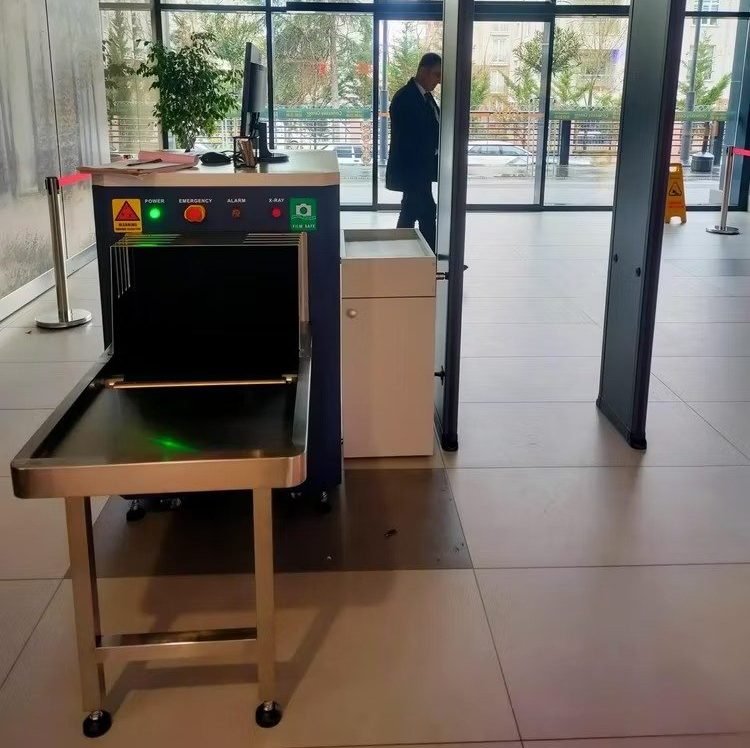
A luggage scanner is an electronic security device that uses X-ray imaging or CT scanning technology to generate detailed images of the contents inside a bag or suitcase. Security operators can then analyze these images to identify suspicious objects or substances.
Modern luggage scanners come in different sizes and designs, that is from compact models for small offices and hotels to high-capacity scanners used in international airports.
How Luggage Scanners Work
Luggage scanners operate on dual-energy X-ray technology. Here’s how the process works:
The bag is placed on a conveyor belt and passed through the scanner.
X-rays penetrate the luggage, and sensors detect how different materials absorb radiation.
The system creates a color-coded image that is typically orange for organic materials, blue for metals, and green for mixed materials.
Security personnel review the image for any potential threats or prohibited items.
Some advanced systems now use 3D computed tomography (CT), providing even greater detail and automated detection capabilities.

Key Benefits of Luggage Scanners
Enhanced Security: Detect hidden weapons, drugs, or explosives instantly.
Fast and Efficient: Scan hundreds of bags per hour with minimal manual checking.
Non-Invasive: No need to open or touch personal belongings.
Data Storage: Some systems record images for future security audits.
Versatile Applications: Ideal for airports, embassies, stadiums, hotels, and corporate offices.

Types of Luggage Scanners
Single-View X-ray Scanners: Affordable and effective for small facilities.
Dual-View X-ray Scanners: Offer two viewing angles for more accurate detection.
CT Luggage Scanners: Provide 3D images and automated threat recognition, often used in large airports.
Portable Luggage Scanners: Compact and easy to move, perfect for temporary or mobile checkpoints.
Top Luggage Scanner Brands and Models
Hikvision ISD-SC6550SA-E2CL: This is a dual-energy X-ray baggage scanner with a tunnel size of 655 × 500 mm
(single-energy) ZKTeco ZKX5030A : It as a tunnel size of 507 mm wide × 305 mm high and is good for carry-on baggage, smaller items.

ZKX5030C ZKTeco (dual energy): Better material discrimination (organic vs inorganic) than single-energy models.
ZKX6550 ZKTeco (single energy, larger tunnel): Bigger capacity, can handle larger/medium baggage.
Smith’s Detection HI-SCAN Series: Trusted in airports worldwide.
Astrophysics XIS Series: High-resolution imaging and robust performance.
Rapiscan 620XR: Known for speed and reliability.
Nuctech CX Series: Advanced AI-assisted detection technology.
How to Choose the Right Luggage Scanner
When selecting a luggage scanner, consider:
Size of items you’ll be scanning
Throughput rate (bags per hour)
Image resolution and detection accuracy
Space availability at your facility
Compliance with international security standards (like ECAC or TSA)
Maintenance and Safety Tips
Regularly calibrate and service scanners for accurate performance.
Ensure operators receive proper training in image interpretation.
Follow radiation safety guidelines despite the fact that modern scanners are safe for humans, but periodic checks are essential.
Conclusion
A luggage scanner is more than just a piece of equipment, it’s a vital investment in safety, efficiency, and peace of mind. Whether you’re managing an airport, a border post, or a hotel, choosing the right scanner ensures smooth operations and top-tier security for everyone passing through.