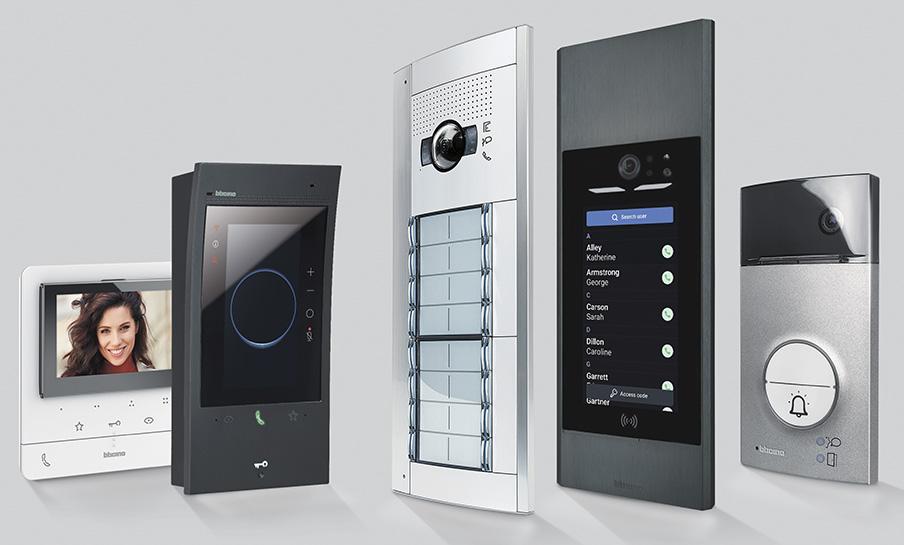
In today’s world, security and convenience go hand in hand. One technology that has transformed how we manage entry points in residential, commercial, and industrial settings is the Video Intercom System. Unlike traditional analogue systems, IP intercoms combine high-definition video, internet connectivity, and advanced smart features to deliver unmatched communication and security.
What is an IP Video Intercom?
An IP Video Intercom is a network-based communication device that allows audio and video interaction between different locations over an internet protocol (IP) network. It not only lets you see and talk to visitors before granting access but also integrates with other security systems for seamless control.
These systems are commonly used in:
Apartment complexes and gated communities
Office buildings and corporate facilities
Schools and universities
Industrial and government institutions
Smart homes
What is an Analogue Video Intercom?
An analogue video intercom is a communication and security device that allows users to see and speak with visitors at the entrance of a building or home. The system transmits video and audio signals over coaxial cables or two-wire connections without requiring internet connectivity.

Key Features of IP Video Intercom Systems
High-Definition Video & Audio
Clear video feeds and noise-canceling audio ensure you can identify and communicate with visitors easily.
Remote Access via Smartphone Apps
Many IP intercoms allow users to receive calls, unlock doors, or monitor entry points directly from their phone or tablet.
Integration with Security Systems
They can connect with CCTV cameras, access control systems, alarms, and smart locks for a unified security solution.
Scalability & Flexibility
Unlike analogue systems, IP intercoms can be expanded without rewiring making them ideal for growing businesses and residential estates.
Cloud Storage & Recording
Some models support cloud or local storage, ensuring that video interactions are recorded for future reference.
Two-Way Communication
Enables seamless interaction between visitors and security personnel or homeowners, enhancing safety.
Key Features of Analogue Video Intercoms
Basic Video Monitoring: Provides live video feed from the outdoor unit to the indoor monitor.
Two-Way Communication: Enables real-time voice conversation between residents and visitors.
Simple Cabling: Uses traditional wiring (coaxial or two-wire), making it easy to install in older buildings.
Reliable Performance: Less affected by network issues since it does not depend on internet connectivity.
Cost-Effective: Generally, more affordable than IP-based systems, making them ideal for budget-conscious users.
Examples of Video Intercom Systems
Fanvil i18S: IP / SIP-based video intercom with HD video, rugged outdoor rating (IP65 / IK10), good for businesses, schools, etc.

Dahua Analog Video Intercom Package: Analogue system with indoor monitor, outdoor door station, 4-wire setup.
Hikvision Analogue HD Intercom Kit (DS-KIS203): Comes with a colour door station and indoor station; supports door unlocking from inside.

Dahua KTA02M Analogue Video Intercom Kit: Villa door-station style, indoor screen, IR illumination
Benefits of IP Video Intercom Systems
Enhanced Security: See and verify who’s at the door before granting access.
Convenience: Grant or deny access remotely, even when you’re not on-site.
Cost-Effective Expansion: Easy to scale up without major infrastructure changes.
Smart Technology: Integration with IoT devices brings automation and remote management.
Professional Image: Ideal for businesses that want to project a modern, secure, and efficient environment.
Benefits of Analogue Intercoms
Affordable Installation and Maintenance: No need for complex network infrastructure.
User-Friendly Operation: Simple interface that doesn’t require advanced technical knowledge.
Stable Connection: Works without reliance on Wi-Fi or LAN, ensuring consistent performance.
Durability: Proven technology that has been trusted for decades.
Limitations to Consider
Lower Image Quality: Compared to HD/IP systems, analogue video quality is more limited.
Limited Expandability: Adding multiple monitors, door stations, or integration with smartphones is difficult.
Less Smart Features: Lacks remote access, app control, and smart home integration found in IP systems.
Disadvantages of Analogue Video Intercoms
Lower Image and Audio Quality: Limited resolution compared to HD/IP systems.
Limited Scalability: Difficult to expand with multiple monitors or integrate with other security devices.
No Remote Access: Cannot connect to smartphones or apps for off-site monitoring.
Outdated Technology: May not be compatible with modern smart home systems.
Wiring Limitations: Requires coaxial or two-wire cabling, which can be less flexible than modern IP setups.
Disadvantages of IP Video Intercoms
Higher Cost: More expensive to purchase, install, and maintain compared to analogue systems.
Network Dependency: Performance relies on stable internet or LAN; poor connections can cause delays or interruptions.
Complex Installation: Requires networking knowledge and often professional setup.
Cybersecurity Risks: Vulnerable to hacking if not properly secured.
Power Requirements: Often need PoE (Power over Ethernet) or external power supplies, which may increase installation complexity.
Conclusion
The IP Video Intercom System is more than just a door entry solution. It’s a complete security and communication tool. Whether for homes, apartments, or offices, it enhances safety, convenience, and efficiency. With features like HD video, mobile access, and integration with other smart systems, it’s no surprise that IP video intercoms are fast becoming the standard in modern security solutions.
Analogue video intercoms remain a practical choice for those seeking a straightforward, cost-effective, and reliable security communication solution. While they may lack the smart features of IP-based systems, their simplicity and durability continue to make them a trusted option for many residential and small-scale commercial setups.